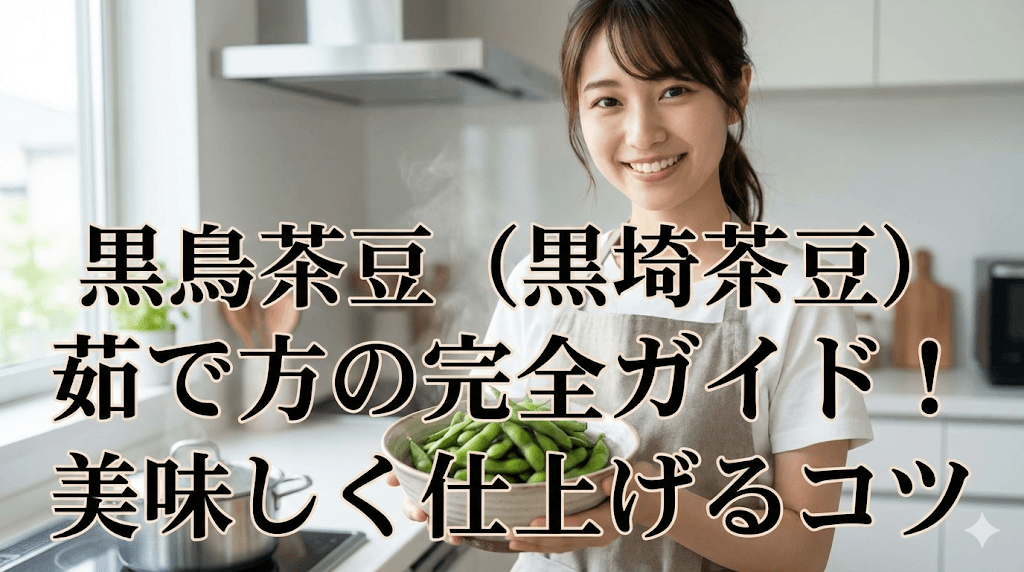
黒鳥茶豆(黒埼茶豆も含む) 茹で方を知りたい方へ、新鮮な茶豆を最高に美味しく仕上げるための基本ポイントを詳しく解説します。
黒鳥茶豆は鮮度が命とも言える食材です。そのため、収穫後すぐに出荷される新鮮な黒鳥茶豆を手に入れた際には、適切な茹で方や保存方法を知っておくことが非常に重要です。
茶豆の選び方や茹でる際の塩加減、茹でた後の冷まし方、そして保存方法まで、初心者でも簡単に実践できる方法を網羅しています。これから黒鳥茶豆を美味しく楽しむための全てをお伝えします。
黒鳥茶豆(黒埼茶豆)茹で方の基本ポイント

茶豆の選び方と保存方法
黒鳥茶豆は、その鮮度を保つために、当日の朝方や夜中から収穫され、朝にはキューピットさんに出荷されています。そのため、店頭に並んでいる茶豆は非常に新鮮です。
購入後は、鮮度を保つために冷蔵庫に入れておくことが推奨されます。
また、長期保存する場合は、生のまま冷凍保存すより軽く茹でた後に冷凍保存する方が良いでしょう。
これにより、茶豆の鮮度と風味を長期間保つことが可能です。
冷凍する際には、空気をしっかりと抜いて保存することで品質を保つことができます。
茹でる前の準備と注意点
黒鳥茶豆は生産者が丁寧に調整、選別をしており、余分な汚れや葉などをしっかりと取り除いた状態で販売されています。
そのため、茹でる前の準備としては、軽く水で洗うだけで十分です。
特に土やゴミが付着していないため、手間がかからずすぐに茹でることが可能です。
このようにシンプルな準備で美味しい茶豆を手軽に楽しむことができます。
茹でる際の塩加減について

黒鳥茶豆の茹で方で重要なポイントの一つに、塩加減があります。適切な塩加減は、茶豆の旨味を最大限に引き出します。
一般的には、水1リットルに対して塩を約40グラム使用するのが目安です。
この割合により、塩味が程よく豆に浸透し、絶妙なバランスの味わいが楽しめます。
茹でる前に豆全体に塩をまぶして揉む「塩もみ」を行うと、さらに風味が際立ちますが、茹でる際の塩の量も調整する必要がありますので注意が必要です。
茹でる時間の目安と調整方法
茶豆を茹でる時間は、風味と食感を左右する重要な要素です。茹でる時間の目安は、通常3分から5分程度です。
ただし、豆の大きさやお好みによって茹で時間は調整が必要です。茹ですぎると食感が失われ、逆に茹で足りないと硬さが残ってしまいます。
茹で上がりの目安として、豆をひとつ取り出して食べてみて、程よい柔らかさが感じられるかを確認しましょう。
また、茹でた後はすぐに冷水で冷やすのではなく、余熱で少し蒸らすことで風味が深まります。
茹でた後の冷まし方のコツ

黒鳥茶豆を茹でた後の冷まし方にもコツがあります。茹で上がった茶豆をすぐにざるにあげ、余熱で蒸らすことで豆の甘味を引き出します。
ここで冷水に入れて急激に冷やすと、豆の風味が損なわれることがあります。
そのため、自然に冷ますか、風通しの良い場所又は扇風機などで冷ますのが良いでしょう。
また、塩気をより感じたい場合は、茹で上がりに再度軽く塩を振るのもおすすめです。
黒鳥茶豆(黒埼茶豆)美味しく茹でるためのコツ
茶豆の風味を引き立てる茹で方の工夫
黒鳥茶豆の風味を最大限に引き立てるためには、茹で方に工夫が必要です。
例えば、茹でる際に豆をしっかりと塩もみすることで、豆の表面が引き締まり、茹でた後の塩味の乗りが良くなります。
また、茹でる際のお湯にはあらかじめたっぷりの塩を加えることで、豆全体に均等な味付けが可能になります。
茹で時間を守ることと、適度な余熱で蒸らすことも、風味を引き立てるための重要なポイントです。
茹でる際に必要な水量と鍋の選び方

茶豆を茹でる際に必要な水量は、豆がしっかり浸かる程度が必要です。
目安としては、茶豆の量の3倍から4倍の水を用意しましょう。
水量が少ないと、茹でムラができてしまい、均一な仕上がりになりません。
また、鍋の選び方も重要で、広くて底が浅い鍋を使うことで、茶豆が均等に茹で上がります。
さらに、茹でる際には強火で沸騰を保ちながら茹でると、風味を損なうことなく美味しく仕上がります。
茹で上がりの確認方法と理想の食感
黒鳥茶豆の茹で上がりを確認する際は、豆の色や柔らかさをチェックします。
理想的な茹で上がりの状態は、鮮やかな緑色で、さやにハリがあり、中の豆がふっくらとしていることです。
茹で時間が短すぎると硬さが残り、長すぎると豆の甘味が失われてしまいます。
茹で上がりを確認するためには、1粒取り出して食べてみるのが最も確実です。
茹で後の余熱も考えて柔らかすぎず、適度な歯ごたえがある状態が理想的な食感です。
茹でた後の保存方法と再加熱のポイント
茹でた黒鳥茶豆を保存する場合、冷蔵保存する際は密閉容器に入れて風味を保つことが大切です。
また、長期間保存する場合は冷凍保存も可能です。
冷凍する際は、茹でた茶豆を冷ましてから保存袋に入れ、空気を抜いて保存します。
再加熱する際は、電子レンジで加熱するのが簡単ですが、加熱しすぎると風味が損なわれるため、軽く温める程度にとどめましょう。
茹で方に関するよくある失敗とその対処法
茶豆の茹で方でよくある失敗には、茹ですぎてしまうことや、塩加減を間違えることがあります。
茹ですぎると豆の食感が損なわれ、柔らかくなりすぎてしまいます。
これを防ぐためには、茹で時間をしっかりと計り、3分から5分の間で調整することが重要です。
また、塩が多すぎると豆がしょっぱくなりすぎてしまうため、塩の量も注意深く測りましょう。
もし塩味が強くなってしまった場合は、茹でた後に軽く水で洗うことで、余分な塩分を取り除くことが可能です。
まとめ:新鮮な黒鳥茶豆(黒埼茶豆) 茹で方と保存方法のポイント
kurotori-tyamame (Kurosaki Edamame): Complete Guide to Boiling! Tips for Perfect Flavor

For those who want to know how to boil kurotori-tyamame (including Kurosaki Edamame), this guide provides a detailed explanation of the key points for making the freshest edamame taste its best.
kurotori-tyamame is a delicacy where freshness is key. Therefore, when you manage to get freshly harvested kurotori-tyamame, it’s essential to know the right boiling and storage methods.
This guide covers everything from how to choose the best edamame, the correct salt amount for boiling, how to cool it down after boiling, to the proper storage methods—all in a way that even beginners can easily follow. We’ll share everything you need to know to enjoy kurotori-tyamame at its most delicious.
Basic Points for Boiling kurotori-tyamame (Kurosaki Edamame)
Choosing and Storing Edamame
kurotori-tyamame is harvested early in the morning or during the night to maintain its freshness and shipped to retailers by morning. Therefore, the edamame found on store shelves is extremely fresh. After purchasing, it is recommended to keep the edamame in the refrigerator to maintain its freshness. For long-term storage, it's better to lightly boil the edamame before freezing rather than freezing it raw. This helps preserve the edamame’s freshness and flavor over a longer period. When freezing, make sure to remove as much air as possible to maintain quality.
Preparation and Tips Before Boiling
kurotori-tyamame is carefully sorted and cleaned by the producers to remove excess dirt and leaves, so all you need to do before boiling is give it a light rinse with water. Since there is no soil or debris, it can be prepared easily and quickly. This simple preparation allows you to easily enjoy delicious edamame.
Salt Ratio for Boiling
One of the important points in boiling kurotori-tyamame is the amount of salt used. The correct salt ratio helps bring out the full flavor of the edamame. Generally, the guideline is to use about 40 grams of salt per 1 liter of water. This proportion allows the saltiness to penetrate the beans, resulting in a perfectly balanced flavor. Rubbing the edamame with salt before boiling, known as “shio-momi,” can further enhance the flavor, but be mindful to adjust the amount of salt used during boiling accordingly.
Boiling Time and How to Adjust It
The boiling time for edamame is a crucial factor affecting flavor and texture. The general boiling time is between 3 to 5 minutes, but this may need adjustment depending on the size of the beans and your personal preference. If boiled too long, the texture will be lost, while under-boiling leaves the beans too hard. As a guideline, take a bean and taste it to check for the right softness. After boiling, do not immediately cool the edamame in cold water; instead, let it steam a bit in residual heat to deepen the flavor.
Tips for Cooling Edamame After Boiling
The way you cool kurotori-tyamame after boiling also makes a difference. Take the edamame out and drain it in a strainer, allowing it to steam and bring out the sweetness. Quickly cooling it in cold water can diminish the flavor, so it is better to let it cool naturally, or use a fan in a well-ventilated place. For a stronger salty taste, you can sprinkle some salt lightly after boiling.
Tips for Boiling Black Swan Edamame Perfectly

Boiling Techniques to Enhance Flavor
To bring out the best flavor in kurotori-tyamame, some effort in the boiling process is essential. For example, rubbing the beans with salt before boiling helps tighten their surface, improving the salt coverage after boiling. Also, adding a generous amount of salt to the boiling water ensures even seasoning of all the beans. Maintaining the correct boiling time and allowing residual heat to steam the beans are also key steps to enhance their flavor.
Water Volume and Pot Selection
When boiling edamame, it is important to use enough water so that the beans are fully submerged—around three to four times the volume of the beans. Using too little water can lead to uneven cooking. Choosing a wide, shallow pot also helps ensure the edamame cooks evenly. Additionally, boiling over high heat helps keep the flavor intact, resulting in a delicious finish.
How to Check for Perfectly Boiled Edamame and the Ideal Texture
To check if the kurotori-tyamame is perfectly boiled, inspect the color and firmness of the beans. The ideal state is when the beans are a vibrant green color, the pods are plump, and the inside beans are soft. If the boiling time is too short, the beans will be hard, while over-boiling causes the sweetness to diminish. The best way to check is to take one out and taste it—ensuring it has the right amount of firmness, considering the residual heat.
Storing and Reheating Boiled Edamame
If you need to store boiled kurotori-tyamame, it is best to keep it in an airtight container in the refrigerator to retain the flavor. For long-term storage, freezing is an option. After boiling and cooling, place the edamame in a freezer bag and remove as much air as possible before freezing. When reheating, the microwave is convenient, but avoid overdoing it as it can reduce the flavor—just heat it lightly.
Common Boiling Mistakes and Solutions
Common mistakes when boiling edamame include over-boiling and incorrect salt measurement. Over-boiling causes the beans to lose their texture and become too soft. To prevent this, accurately time the boiling process to between 3 and 5 minutes. Using too much salt can make the beans overly salty, so be careful with measurements. If they end up too salty, a light rinse with water can help remove excess salt.